Prepare your
measurements.
A clear measurement list helps us discuss the fit you want before stitching begins.
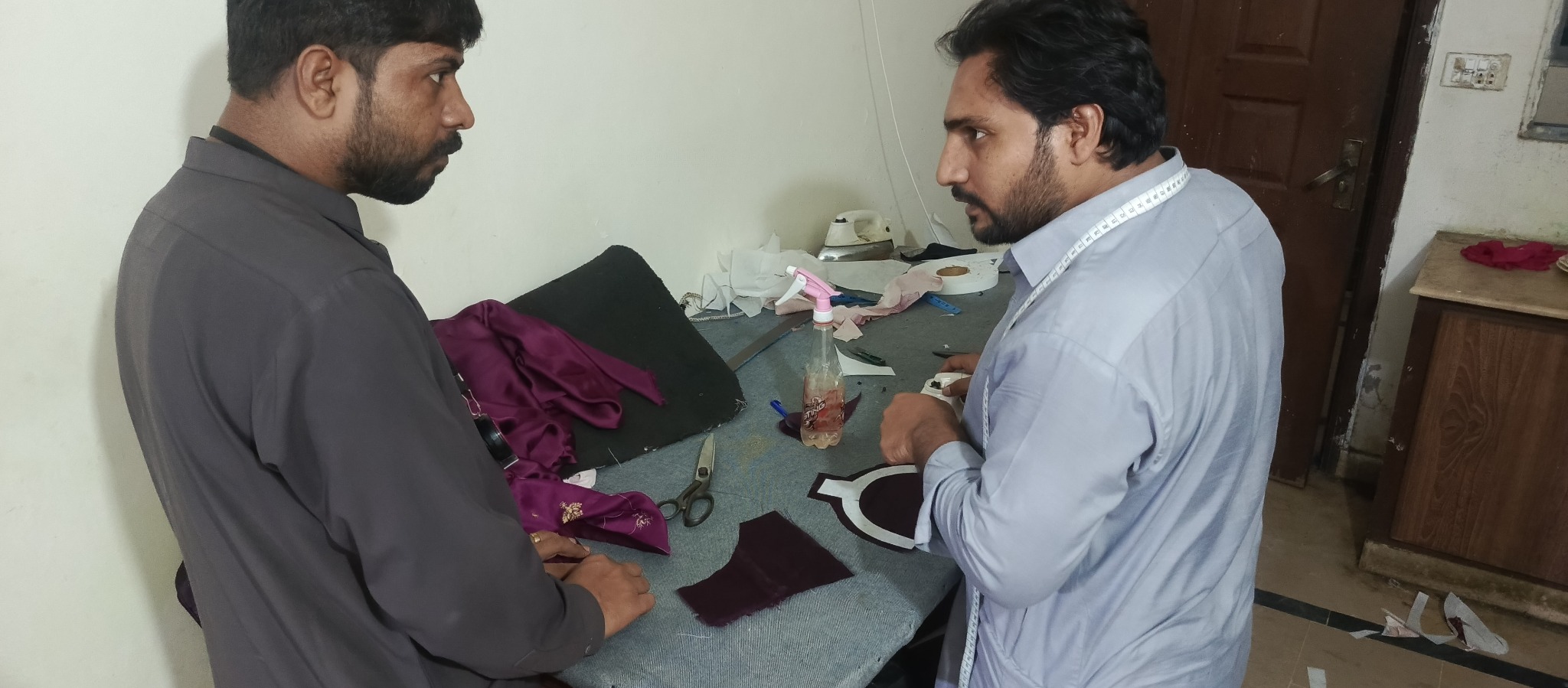
Choose one measurement method and label it
Body measurements are taken around a person. Garment measurements are taken from an existing outfit laid flat. They must not be mixed without explanation: a flat shirt width is not the same number as the full body circumference. Write BODY or GARMENT beside your measurement list and tell us which method you used.
Record measurements in inches. Ask someone to help when measuring shoulders, back length or sleeves. Use a flexible tape that has not stretched, keep it level, and check each measurement a second time. This is preparation guidance; confirm the exact measurement list with our team for your chosen design.
Preparing body measurements
Wear light, fitted clothing and stand naturally. Do not pull the tape tightly into the body or add an estimated fitting allowance. Tell the tailor separately whether you prefer a relaxed or closer fit; the cutting allowance depends on the garment design and fabric.
- Bust: measure around the fullest part, keeping the tape level across the back.
- Waist: record the position you measured; the natural waist and a trouser waistband may sit at different heights.
- Hip: measure around the fullest part of the hips.
- Shoulder and sleeve: ask for help and confirm the shoulder endpoints with the tailor, particularly for dropped shoulders or sleeveless designs.
- Desired length: agree the starting point and finish point for the shirt, sleeve and trouser.
Using a well-fitting shirt as a reference
Lay the shirt on a level surface without stretching it. Smooth out folds and measure from seam to seam where applicable. Write down the shoulder width, flat chest width, shirt length and sleeve length, and label the starting and ending points. Send photographs with the tape in position if a measurement could be interpreted in more than one way.
Tell us what you would change from this reference: for example, a longer shirt, a looser upper arm or wider side openings. Do not assume that we should copy every detail of a reference garment unless that is what you want.
Shalwar and trouser details
Share whether you want shalwar, straight trousers or another style. Specify the waistband position, desired length, leg shape and hem opening. A flat waistband width differs from a circumference, and an elastic waistband needs an explanation of whether it was measured relaxed or stretched.
For a reference trouser, measure it laid flat and include a clear photograph. Confirm which measurements the tailor requires for rise and seat rather than estimating them. A well-fitting reference garment can be more informative than a size name such as Small or Medium.
A final check before sending
Put your name and the date on the measurement sheet. State the units and method, identify each garment separately, and include your fit preference. Recheck any figure that seems unusual instead of silently changing it. If you are unsure, arrange a measurement discussion before sending fabric.
Measurements are personal information. Send them directly through the contact channels on our contact page; do not put them in public social media comments. Read our privacy policy for information handling details.